
What Is an Accredited Investor? Requirements and How to Verify Your Status
What Is an Accredited Investor? Requirements and How to Verify Your Status
Cereus Real Estate | August 21, 2026
Are you an accredited investor?
For physicians and other high-income professionals, accreditation isn't about prestige—it's simply a legal qualification that determines eligibility for certain private investments. In this guide, we'll explain what an accredited investor is, who qualifies, how to verify your status, and why it matters for real estate syndication investing.
What Is an Accredited Investor?
An accredited investor is an individual or entity that meets financial qualifications established by the U.S. Securities and Exchange Commission (SEC). These standards allow investors to participate in private investment offerings that are not registered with the SEC, including many multifamily real estate syndications.
Unlike publicly traded REITs or stocks, private syndications are available only to eligible investors under specific securities regulations.
For many physicians, dentists, and healthcare professionals, accredited status opens the door to investments designed to generate passive income while preserving valuable time.
Why does accreditation exist?
The SEC's goal is investor protection. Private investments often provide less public disclosure than publicly traded securities, so regulators require participants to demonstrate financial sophistication or sufficient resources to bear investment risk.
Accreditation does not guarantee investment success; it simply determines eligibility.
Accredited Investor Requirements (2026)
You generally qualify if you meet any one of these criteria:
Income Requirement
Earned $200,000+ individually in each of the last two years (or $300,000+ with a spouse or spousal equivalent), with a reasonable expectation of maintaining that income.
Net Worth Requirement
Have a net worth exceeding $1 million, alone or with a spouse, excluding your primary residence.
Professional Qualification
Hold certain SEC-recognized financial licenses, such as Series 7, Series 65, or Series 82.
Quick qualification snapshot
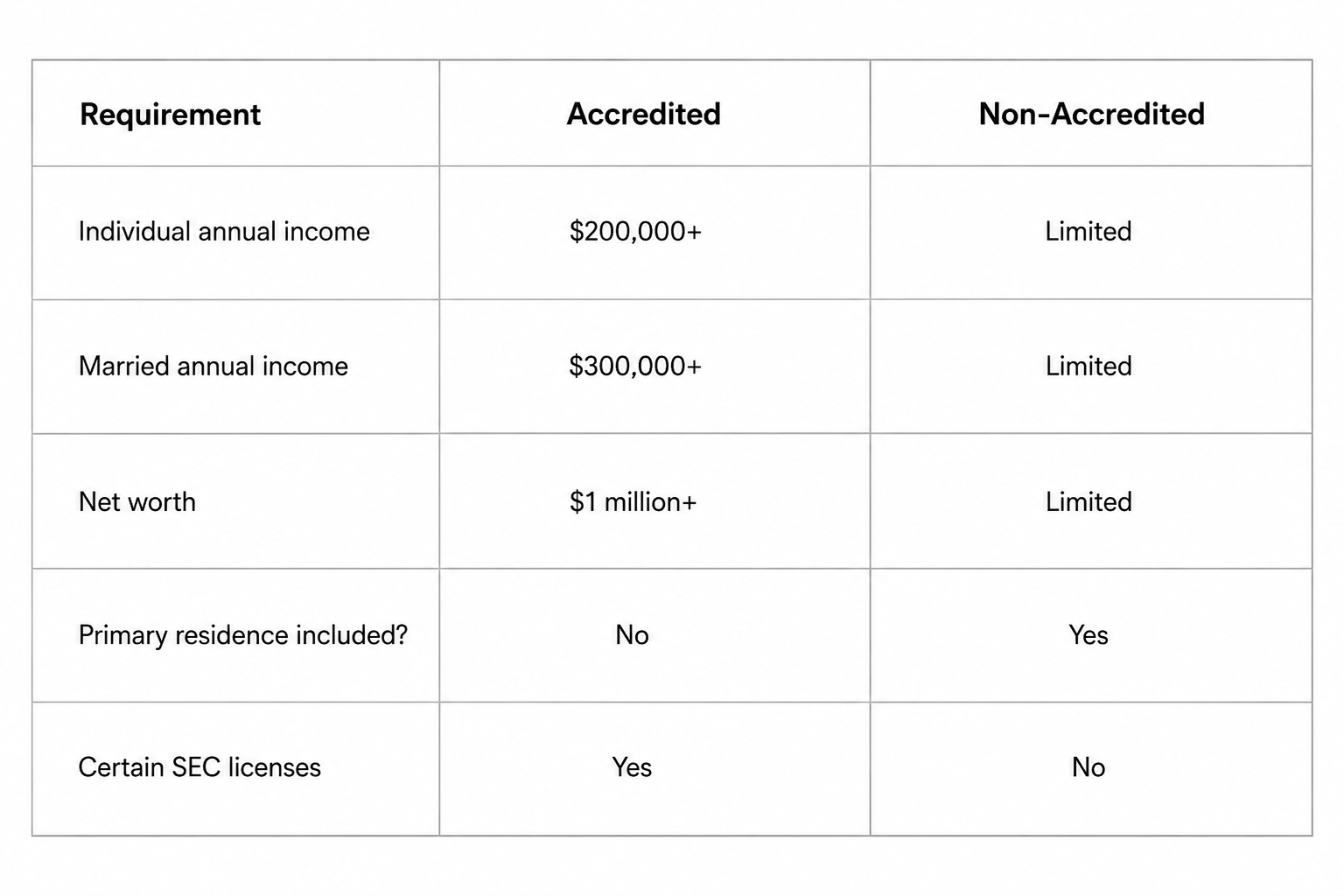
Meeting just one of these categories is typically enough to qualify.
Why This Matters in Passive Real Estate Investing
Most multifamily real estate investing opportunities are structured as private syndications under Regulation D. These offerings allow groups of investors to collectively purchase apartment communities that would be difficult to acquire individually.
Instead of becoming a landlord, passive investors contribute capital while an experienced sponsor manages:
Property acquisition
Renovations
Tenant operations
Asset management
Eventual sale
This structure is one reason passive income for doctors has become an increasingly popular wealth-building strategy. It allows busy professionals to invest in institutional-quality real estate without managing properties themselves.
How a real estate syndication works
In a typical syndication, accredited investors pool capital into a professionally managed investment that acquires and operates an income-producing apartment community.
How to Verify Your Accredited Investor Status
One of the biggest misconceptions is that you simply check a box. In reality, most 506(c) real estate syndications require third-party verification.
Here's how the process usually works:
1. Complete an investor questionnaire
You'll answer basic questions about income, net worth, and investment eligibility.
2. Submit supporting documentation
Depending on how you qualify, verification may include:
Recent tax returns or W-2s
Brokerage or investment account statements
CPA verification letter
Attorney verification letter
Registered investment advisor confirmation
3. Receive accreditation approval
Many sponsors use secure third-party verification services, so your sensitive financial documents aren't reviewed directly by the investment sponsor.
The process is typically completed within a few business days.
Accredited vs Non-Accredited Investors
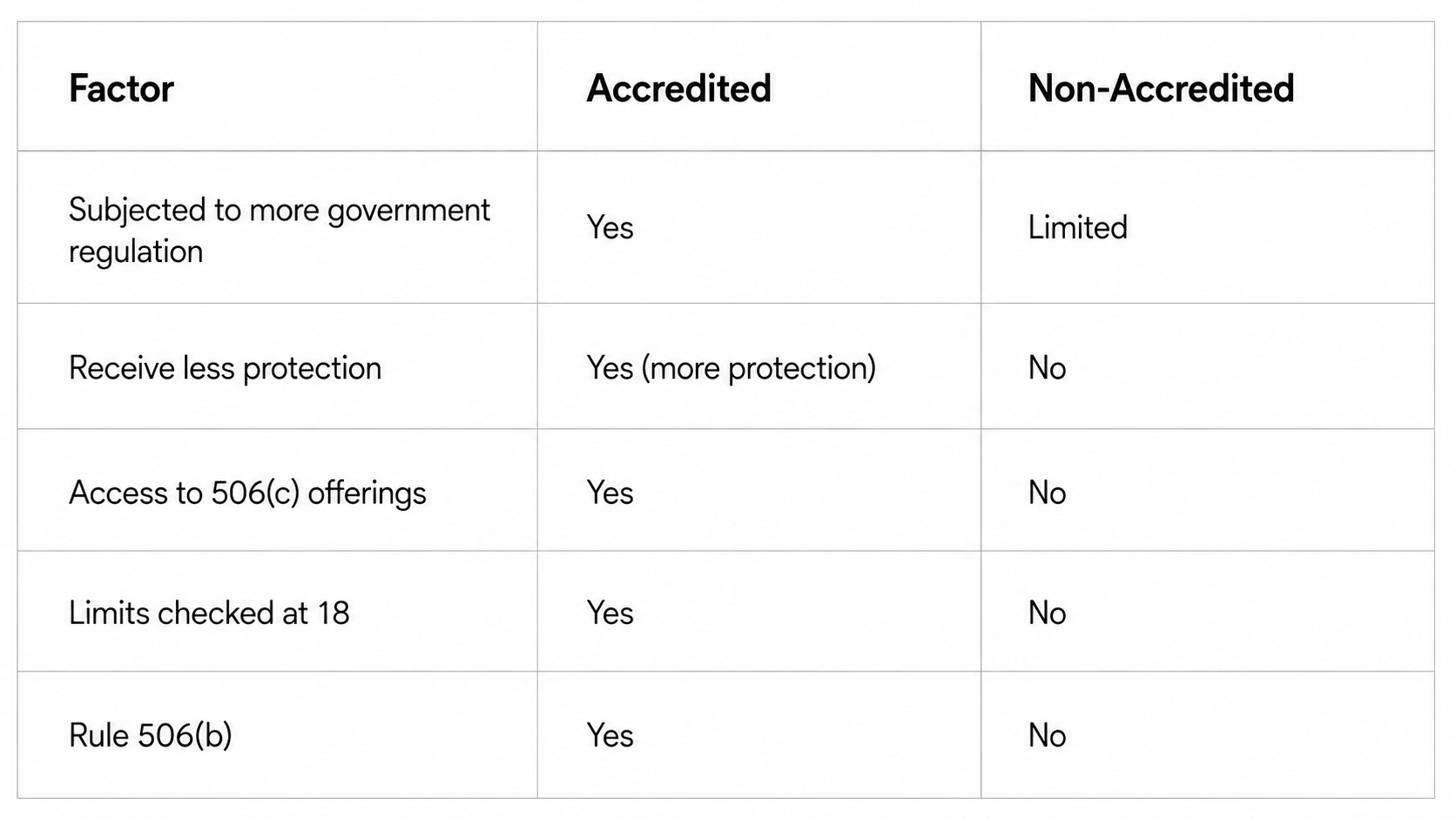
Being non-accredited doesn't mean you cannot invest in real estate it simply limits access to certain private offerings.
Why Physicians Often Qualify
Healthcare professionals frequently meet accreditation requirements because of their earning potential, but many don't realize they're eligible.
A surgeon earning over $200,000 annually may already qualify through income alone. Likewise, physicians who have built retirement and taxable investment accounts may qualify through net worth even if they're early in their careers.
This is why physician financial freedom conversations increasingly include private real estate alongside traditional investing.
Rather than relying solely on salary or market appreciation, many physicians diversify into assets designed to produce the following:
Quarterly cash flow
Tax advantages through depreciation
Long-term equity growth
Reduced correlation with public markets
How Accredited Investors Build Wealth Through Multifamily Real Estate
Accredited investors often focus less on chasing the highest returns and more on owning assets with durable long-term value.
A multifamily syndication may generate returns from several sources:
Rental income distributed periodically
Property appreciation over time
Loan paydown that builds investor equity
Tax benefits through depreciation strategies
This combination makes multifamily investing attractive for professionals seeking wealth without adding another full-time job.
The goal isn't replacing medicine it's creating the freedom to practice on your own terms.
Real Estate vs Stock Market Returns
A common question is whether private real estate is "better" than stocks.
The better comparison is diversification.
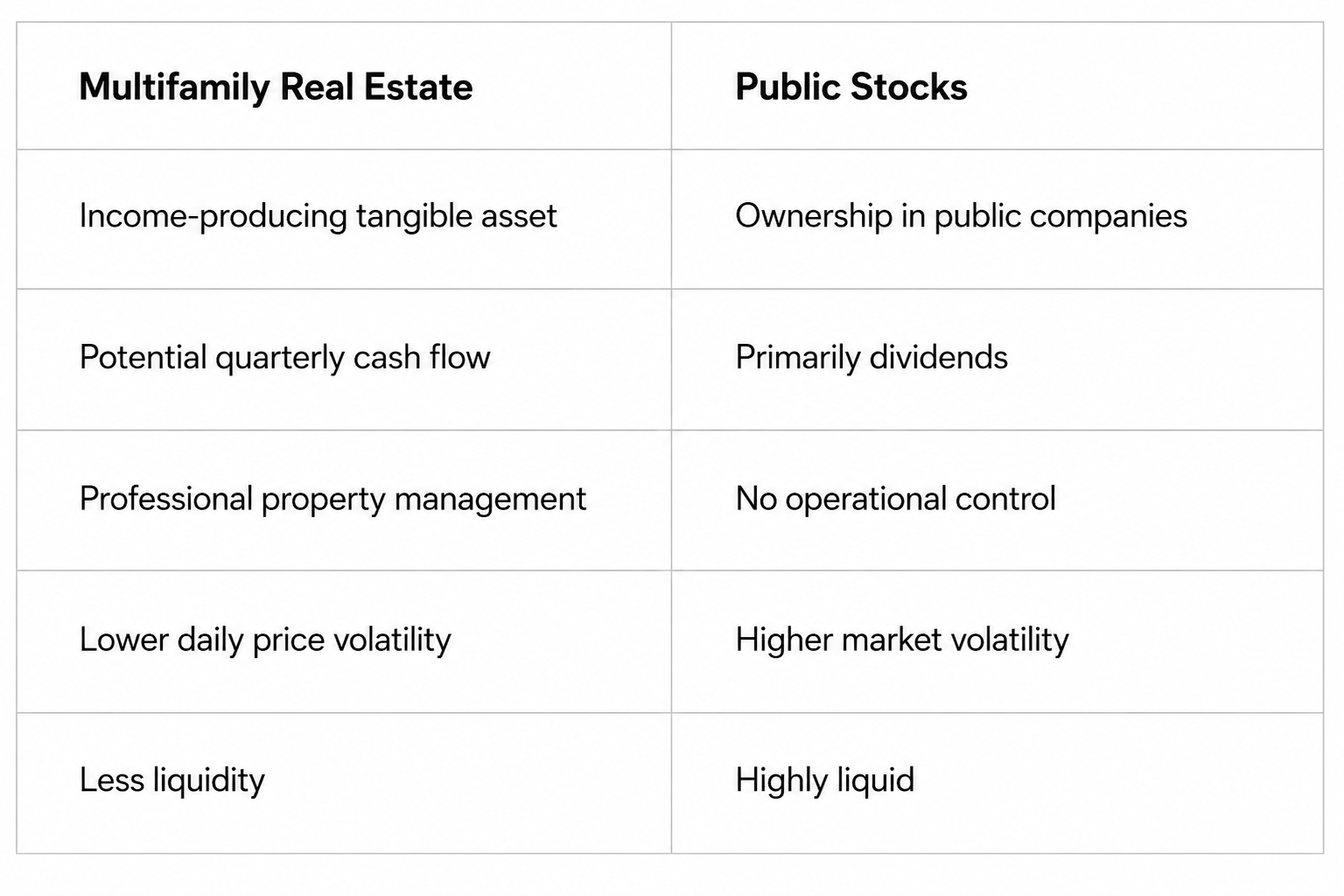
Both can play important roles in a balanced portfolio. Many experienced investors use multifamily real estate to complement, not replace, their stock investments.
Frequently Asked Questions
Do I need to be accredited to invest with Cereus Real Estate?
Some private offerings require accredited investor status, while others may have different eligibility rules depending on the specific exemption being used. Always review the offering documents carefully.
Is my primary home included in net worth?
No. Your primary residence is excluded when calculating the $1 million net worth requirement.
Can spouses qualify together?
Yes. Income and net worth can generally be combined with a spouse or spousal equivalent under SEC rules.
How long does verification take?
Most third-party verification processes take anywhere from 1-5 business days, depending on documentation.
Final Thoughts
Becoming an accredited investor isn't a milestone to celebrate it's simply a gateway to additional investment opportunities. The real objective is using those opportunities wisely.
For physicians, dentists, and other busy professionals, passive real estate investing offers a way to participate in professionally managed multifamily assets without becoming a landlord. Understanding your accreditation status is the first step toward evaluating whether real estate syndication aligns with your long-term financial goals.
Whether you're just beginning your journey into multifamily investing for beginners or exploring strategies for physician investors building generational wealth, education should always come before investing.
Daniel Shin, MD