
Tax Benefits of Real Estate Syndications | Cereus Real Estate
The Tax Benefits of Real Estate Syndications: How Passive Investors Can Keep More of What They Earn
Cereus Real Estate | July 01, 2026
Discover how real estate syndications can help physicians and accredited investors build wealth while taking advantage of valuable tax strategies.
Why Taxes Matter to High-Income Professionals
For many physicians and high-income professionals, taxes are often one of the largest annual expenses. While earning a strong income is important, preserving more of that income can have an even greater impact on long-term wealth.
One reason real estate has remained one of the most attractive investment classes is its unique tax advantages. When structured properly, passive investments in multifamily real estate syndications can provide opportunities to defer taxes, generate paper losses, and potentially improve after-tax returns.
Although every investor's tax situation is different, understanding these benefits can help you make more informed investment decisions.
In this post, we’ll break down exactly how real estate syndications can reduce your tax bill while allowing your wealth to grow. We’ll cover:
Depreciation: The “stuff wears out” tax deduction
Tax-deferred growth: How real estate investments grow tax-free (until you cash out)
Tax-efficient distributions: The cash flow that (usually) isn’t taxed
Long-term capital gains: Why real estate beats W2 income every time
1031 exchanges: The ultimate way to defer taxes indefinitely
K-1 losses: How paper losses can offset other investment income.
Let’s dive in.
Watch the Cereus Happy Hour recording about the Tax Benefits of Real Estate Syndications
1. Depreciation: One of Real Estate's Greatest Advantages
Unlike many investments, real estate allows owners to claim depreciation, a non-cash expense recognized by the IRS to account for the gradual wear and tear of buildings over time.
Although a property may actually increase in market value, tax rules permit investors to deduct a portion of its value each year.
For passive investors participating in a syndication, these depreciation deductions are passed through based on ownership percentage.
The result is often a reduction in taxable income without reducing actual cash flow.
2. Cost Segregation and Bonus Depreciation
One strategy commonly used in multifamily investments is a cost segregation study.
Rather than depreciating an entire building over decades, a cost segregation analysis identifies building components that qualify for shorter depreciation schedules.
These may include:
Flooring
Lighting
Cabinets
Parking lots
Landscaping
Appliances
Accelerating depreciation allows investors to recognize larger deductions during the early years of ownership.
When bonus depreciation is available under current tax law, a significant portion of those deductions may be taken immediately, creating substantial first-year paper losses for investors.
Because tax legislation changes periodically, investors should always confirm current rules with their CPA.
3. Tax-Deferred Growth
Another major benefit of multifamily real estate is that appreciation generally is not taxed until the investment is sold.
Instead of paying taxes every year on unrealized gains, investors can allow equity to compound over time.
Property values may increase through:
Market appreciation
Higher rental income
Property improvements
Loan amortization
This creates the opportunity for long-term wealth accumulation while delaying taxation.
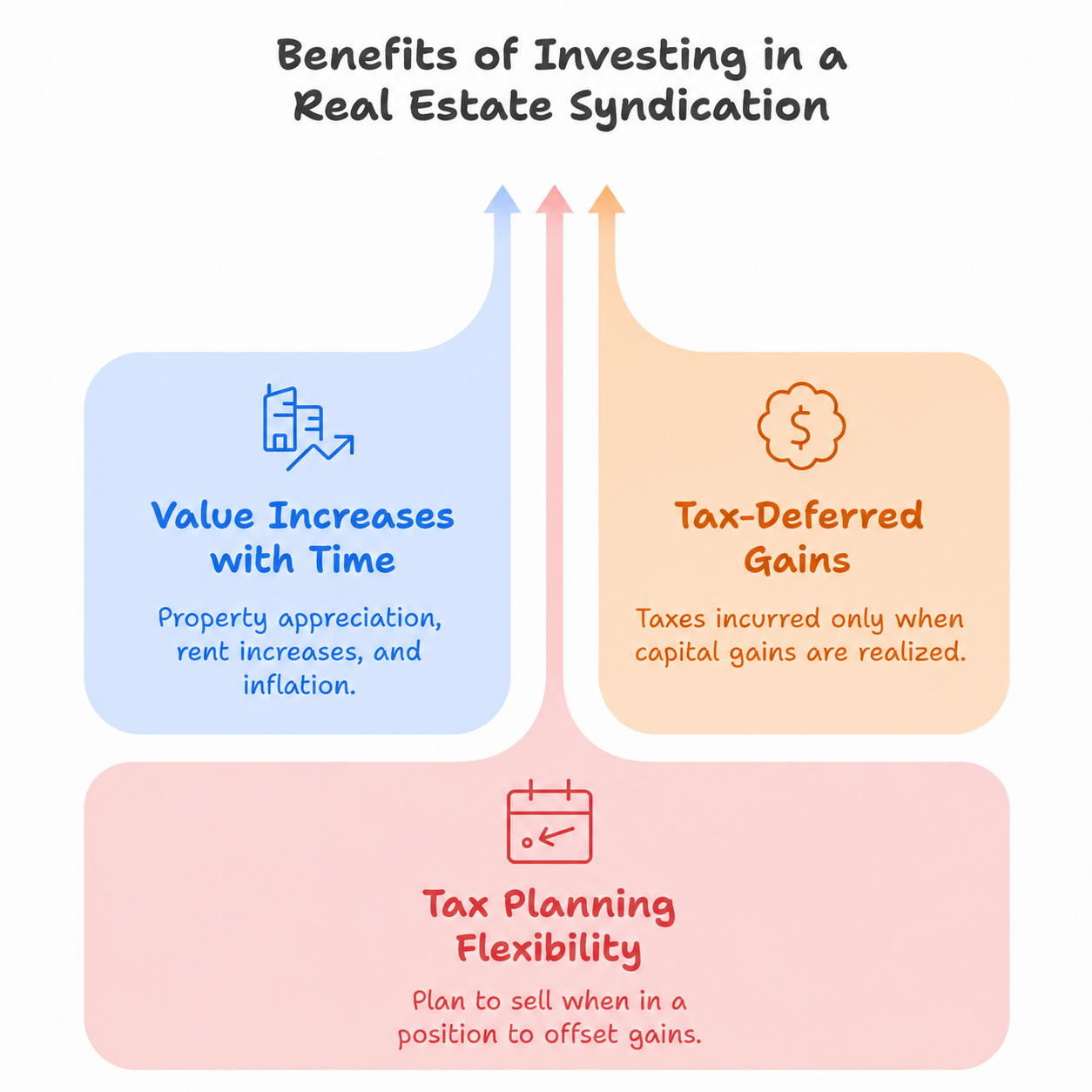
This is why wealthy investors love real estate - your money grows, but your tax bill stays low. 4. Passive Cash Flow
Many real estate syndications distribute cash flow quarterly or monthly once the property reaches operational stability.
In many cases, these distributions are partially offset by depreciation deductions.
While tax treatment varies by investment and investor circumstances, depreciation often helps reduce the taxable portion of distributed income.
This can improve after-tax cash flow compared to many traditional investments.
5. Long-Term Capital Gains
When a property is sold after being held for more than one year, profits generally qualify for long-term capital gains treatment.
Long-term capital gains are typically taxed at lower rates than ordinary income, making them more tax-efficient than wages or bonuses.
For physicians in higher income brackets, this difference can significantly improve net investment returns.
6. 1031 Exchanges
Certain real estate investments may qualify for a Section 1031 exchange.
A properly executed exchange allows proceeds from the sale of one investment property to be reinvested into another qualifying property while deferring capital gains taxes.
Many experienced real estate investors use this strategy repeatedly to continue growing their portfolios without immediately recognizing taxable gains.
Keep in mind that traditional syndicated investments often have limitations regarding 1031 exchanges, so investors should understand the structure of each offering before investing.
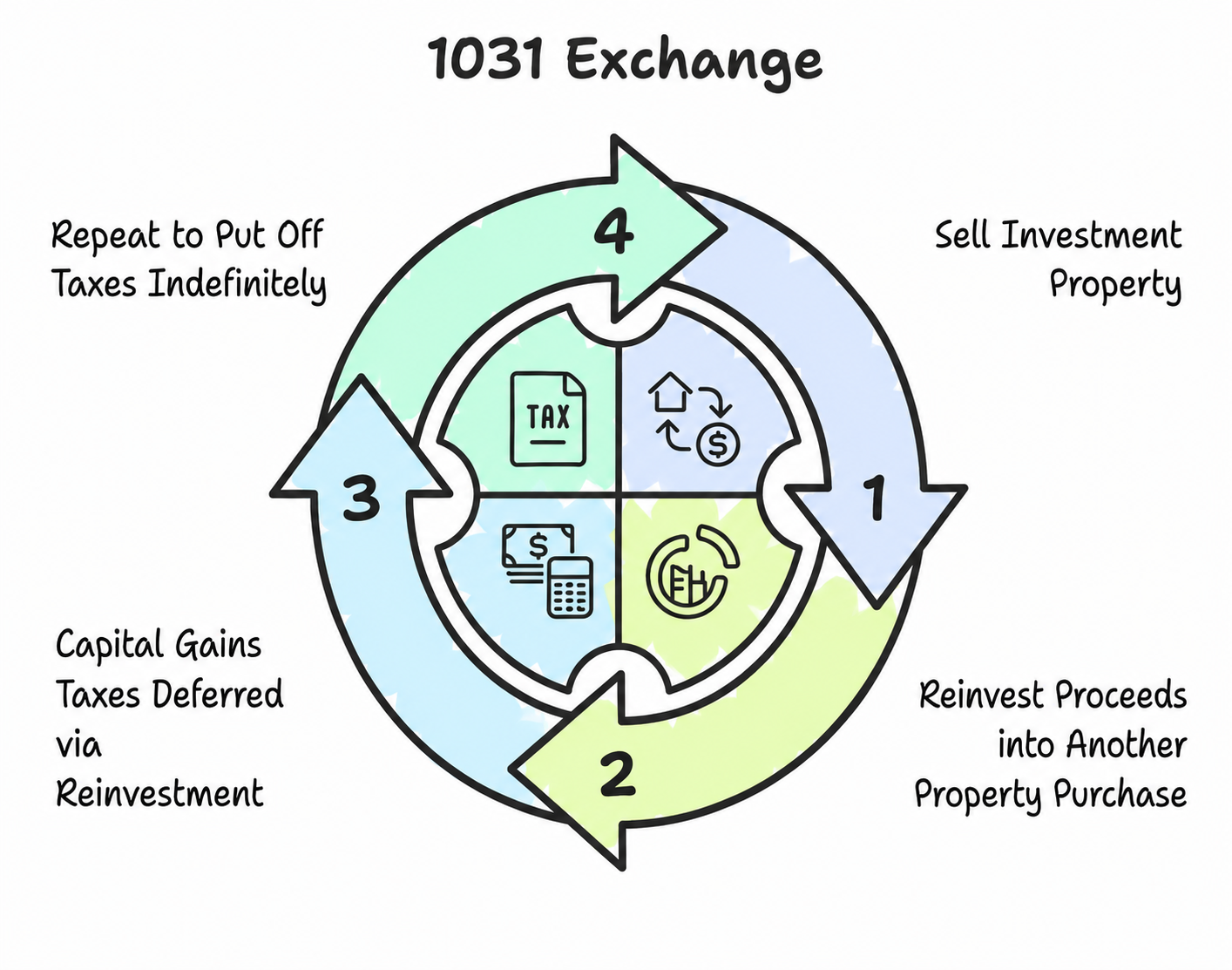
In some syndications,1031 exchanges are an option, but you’ll need to check with the deal’s sponsors to ensure the structure allows for it. 7. Schedule K-1 Reporting
Instead of receiving a Form 1099, investors in many syndications receive a Schedule K-1.
The K-1 reports each investor's share of:
Rental income
Interest expense
Depreciation
Operating expenses
Tax deductions
These allocations may generate passive losses that can offset other passive income, depending on IRS rules and each investor's circumstances.
8. Real Estate Professional Status
Many investors wonder whether passive real estate losses can offset W-2 income.
In most situations, passive losses cannot reduce active employment income.
However, investors who qualify as a Real Estate Professional under IRS rules may be able to use real estate losses differently.
Qualification generally requires meeting strict annual participation and time requirements, making it uncommon for physicians who practice medicine full time.
Because these rules are complex, professional tax guidance is essential.
Building Wealth Through Consistent Investing
While a single investment can provide valuable tax advantages, long-term wealth is often built through consistent investing over many years.
As investors continue adding high-quality real estate assets to their portfolios, they may benefit from:
Ongoing depreciation deductions
Long-term appreciation
Passive income
Portfolio diversification
Tax-efficient wealth accumulation
The Bottom Line
Real estate syndication offer some of the most powerful tax advantages available to investors. From depreciation to long-term capital gains treatment, these benefits allow you to keep more of your money while compounding your wealth.
And if you’re ready to take advantage of these benefits, check out Cereus Real Estate - my real estate investment company; where we help investors like you achieve financial freedom through passive investing.
Because remember - financial freedom isn’t a dream, it’s a decision. Let’s get there together.
Daniel Shin, MD